
How much does silt fence installation cost in North Carolina?
Installed silt fence commonly costs about $2 to $7 per linear foot, according to a 2026 industry cost guide. Most standard jobs land near $3 to $5 per foot. A national cost guide published in December 2025 puts a basic job at $2.30 to $4.00 per foot.
These are market numbers, not our price list. Silt fence is usually one line on a bigger erosion control bid. On a permitted site, the approved plan decides how much fence goes in and what goes with it. Cornerstone Excavation Group puts in silt fence as part of its erosion control work across the Charlotte metro.
What does silt fence cost per linear foot?
Cost guides quote silt fence installation cost by the linear foot. The table pulls their published ranges, so you can read a bid against them.
| What is being priced | Published range | Kind of source |
|---|---|---|
| Standard silt fence, installed | $2 to $7 per linear foot | 2026 industry cost guide |
| Most standard jobs | $3 to $5 per linear foot | 2026 industry cost guide |
| Wire-backed silt fence | $4 to $9 per linear foot | 2026 industry cost guide |
| Chain-link super silt fence | $20 to $30 per linear foot | 2026 industry cost guide |
| Fabric and stakes only | $0.85 to $2 per foot | 2026 industry cost guide |
| Basic job | $2.30 to $4.00 per foot | national cost guide, December 2025 |
| Mid-range job | $4.25 to $7.25 per foot | national cost guide, December 2025 |
| Premium job | $5.50 to $9.50 per foot | national cost guide, December 2025 |
| Small-job contractor minimum | $500 to $1,000 | 2026 industry cost guide |
The two guides define their jobs a little differently, so read the ranges as a ballpark. Labor makes up most of the price. The industry guide puts labor at 70 to 80 percent of the installed price. The other guide says its labor line includes trenching and stake placement.
What else goes on an erosion control bid besides silt fence?
On a permitted site, the approved plan lists each measure and where it goes. Items you may see on the bid include:
- A stone construction entrance, so trucks do not track red clay onto the street.
- Protection around storm inlets, so muddy water stays out of the pipe.
- Seed and mulch on bare ground, to hold the soil until grass takes.
- Rock where water leaves a pipe, so the outlet does not wash out.
- Repairs to the fence after storms, for as long as the ground stays open.
Ask for each item as its own line on the bid. Then you can compare bids side by side. On a new-home lot, these measures go in with the site prep, before the pad is cut.
What moves the price of silt fence?
Length comes first. Silt fence runs along the low side of the disturbed ground, where water leaves the lot. A long low side means more feet of fence.
Slope comes next. Steep ground sends more water at the fence. The plan may call for wire-backed fence there, which costs more per foot.
Access matters too. Open ground lets a machine dig the trench for the fence. Tight spots near trees or a finished yard mean more hand work and more hours.
Then there is time. The fence has to keep working until the ground holds, so it gets repaired after storms. The industry guide lists maintenance and removal as added costs. Ask whether a bid covers storm repairs and pulling the fence at the end.
Small jobs can cost more per foot. The industry guide says small jobs often carry a $500 to $1,000 contractor minimum. The other guide says regional prices can swing 15 to 25 percent either way from a national baseline.
Plan review and permit fees sit on top of all this. The owner, developer or builder pays those.
When does North Carolina require an erosion control plan?
North Carolina requires an erosion and sediment control plan on any site that disturbs over one acre. The plan must be filed 30 or more days before the work starts. It must be approved before any land-disturbing work begins.
Who reviews the plan depends on where the lot sits. Mecklenburg County, the City of Charlotte and the Town of Huntersville run their own local programs, and in Union County so do the City of Monroe and the towns of Waxhaw and Weddington. The state’s Sedimentation Control Commission approves each local program, and local rules can be stricter. Unincorporated Union County goes through NC DEQ.
Under one acre, local rules can still call for silt fence. Check with the town or county before the grading starts. On the York County side of South Carolina, in Fort Mill or Rock Hill, check with York County.
Sites that disturb one acre or more under an approved plan also need NCG01 coverage. NCG01 is NC DEQ’s Construction General Permit. Its ground cover timing may differ from the state sediment rules, so check the permit.
How fast does bare ground have to be covered in North Carolina?
State law sets two clocks. Graded slopes left exposed must be planted or covered within 21 calendar days. That clock starts when any phase of grading is finished. Permanent ground cover is due within 90 calendar days after construction is complete.
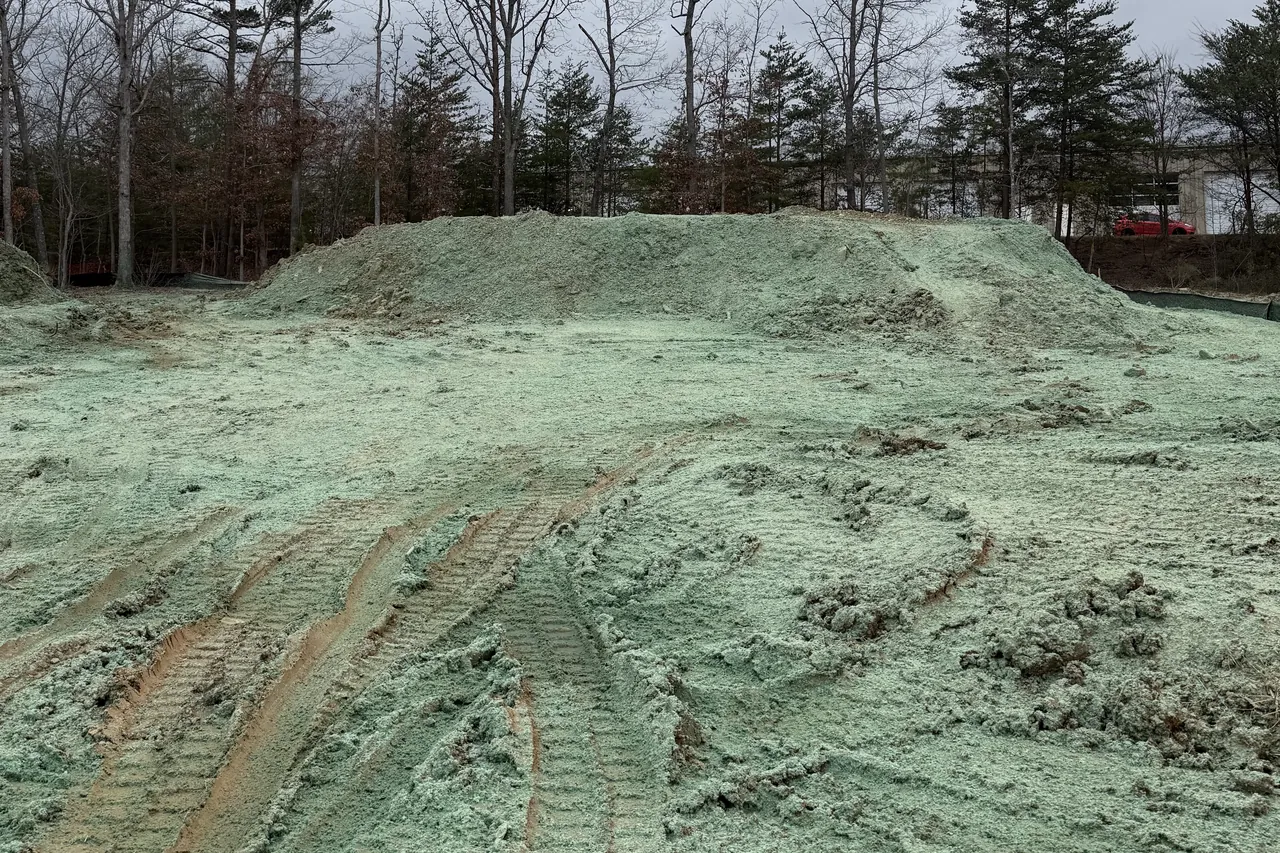
Seed and mulch on bare ground is one way to meet those clocks. After grading, we can seed and mulch the graded ground so it holds.
Who pays for the erosion control plan and the permit?
The plan and the permit sit with the owner, developer or builder. An engineer or designer prepares the plan, and the owner or developer files it.
State law sets the duty on a site over one acre. The person conducting the land-disturbing activity must install the devices. Those devices must keep the sediment within the boundaries of the tract. Cornerstone installs the measures to the approved plan and keeps them up while the work runs.
Review fees depend on who reviews the plan. For a plan the state reviews, North Carolina charges $119 per acre of disturbed land. Local programs set their own fees under a separate state law, so check that program’s fee schedule.
Can you install silt fence yourself?
Fabric and stakes alone run about $0.85 to $2 per foot, according to the industry guide. Most of the installed price is labor. The work means trenching in the fabric, setting the stakes and backfilling the trench.
On a small yard project with no plan, some homeowners put it in themselves. On a permitted site, the fence has to match the approved plan. It has to keep working until the ground holds. That upkeep is simpler when the contractor doing the grading also keeps up the fence.
How do you get a real number for your lot?
Published ranges give you a ballpark and a way to read a bid. Your number comes down to fence length, slope and access. The plan’s spec and how long the ground stays open matter too.
Cornerstone is based in Indian Trail, on the east side of Charlotte, and 5.0-rated on Google. We look at the site first, then put together a free estimate. Call (980) 315-5707, or read more about our erosion control work.