
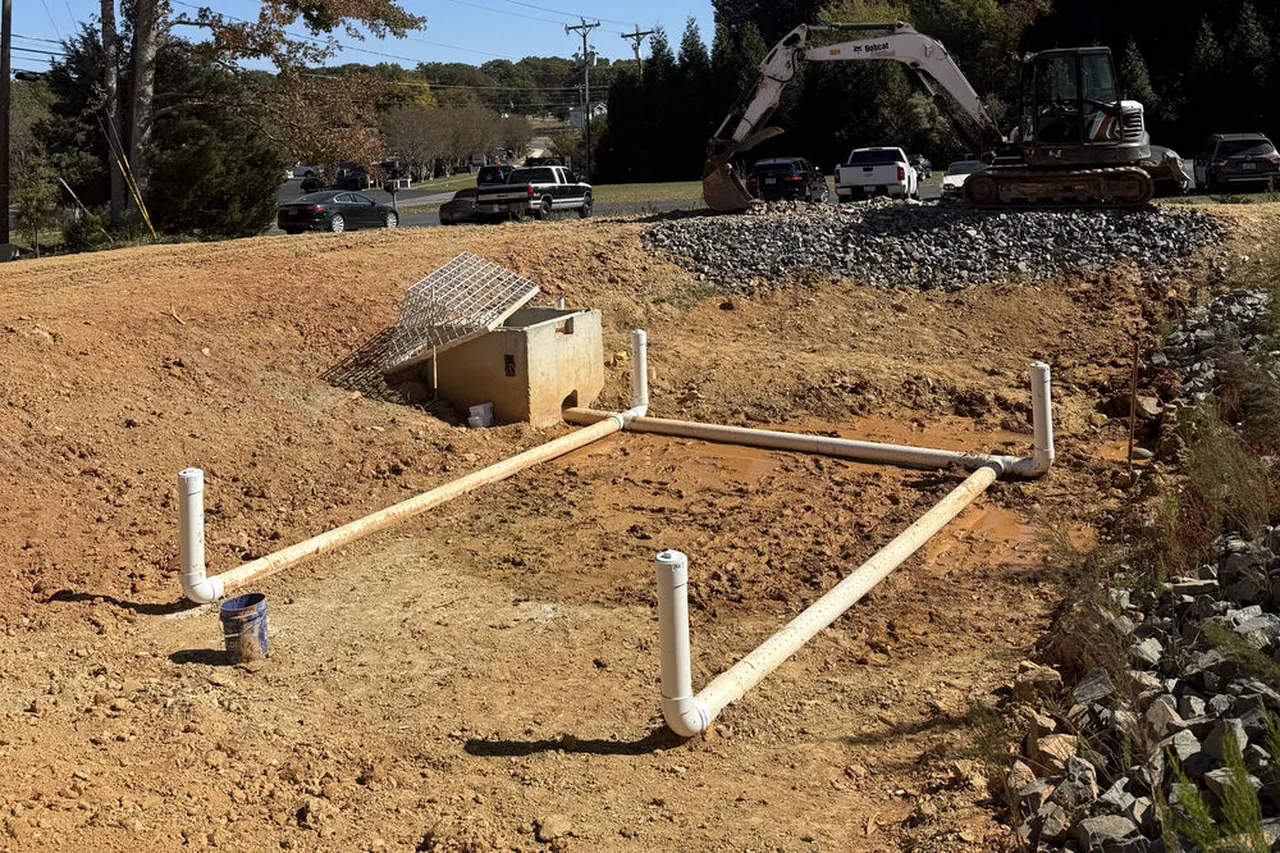
How much does trenching cost per foot in North Carolina?
Trenching costs about $5 to $12 per linear foot for a standard job, according to national cost guides. Complex jobs reach $13 to $40 per foot in one 2026 cost guide. One national estimating tool starts at $11.55 to $27.48 per foot. Its basic trench runs up to 2 feet deep, with no rock.
These are market numbers, not our price list. One national cost guide puts a 100-foot trench at $500 to $1,200 on average. That figure is for a trench carrying electrical conduit or a water, sewer or gas line.
Length, depth, soil and anything in the way decide where your job lands. If you have a line to run, see how our trenching service works.
What does trenching cost per linear foot?
Cost guides price trenching by the linear foot. The table below pulls their published ranges, so you can read a bid against them.
| What is being priced | Published range | Kind of source |
|---|---|---|
| Standard trench | $5 to $12 per linear foot | national cost guides |
| Complex trench | $13 to $40 per linear foot | one 2026 cost guide |
| Basic trench up to 2 feet deep, no rock | $11.55 to $27.48 per linear foot | national estimating tool |
| Trenching labor | $35 to $65 per hour | national cost guide |
| Removing large boulders or a rock ledge | $50 to $250 per cubic foot | national cost guide |
| Horizontal or directional boring, no open trench | $10 to $30 per linear foot | national cost guide |
Each guide defines its job a little differently. The estimating tool’s basic line is labor to dig in favorable conditions, with setup for a small job included. The guide behind the complex range says rocky ground and steep slopes raise the price.
How much does a trench cost by length?
Simple math at the standard $5 to $12 per foot gives these ballparks. Rock, extra depth, tight access and yard repair push a job above them.
| Trench length | At $5 to $12 per linear foot |
|---|---|
| 50 feet | $250 to $600 |
| 100 feet | $500 to $1,200 |
| 200 feet | $1,000 to $2,400 |
| 300 feet | $1,500 to $3,600 |
The 100-foot row matches the national guide’s $500 to $1,200 average. A long run to a detached garage or a standby generator adds up one foot at a time.
What does trenching cost for electrical, water or gas lines?
One 2026 cost guide lists average costs by project type. Length, depth and ground conditions still move each one.
| Project type | Published average |
|---|---|
| Underground electrical | $600 to $2,100 |
| Water line | $800 to $3,000 |
| Gas line | $300 to $800 |
Whoever owns the line sets it and makes the connection. That is the electrician, the gas company or a plumber, or the utility. The trench is a separate piece of work.
A full water, sewer or storm line with its structures, built to a plan, is a utility installation job. For a yard that stays wet, the fix may be a French drain, a swale or a regrade. Our yard drainage page covers those.
Who digs the trench, the electrician or an excavation contractor?
Most electricians do not dig their own trenches, according to one national cost guide. They subcontract that part of the job.
Cornerstone Excavation Group digs to the depth and route the trade, the plan or the utility sets. We hold the trench open for the inspection. Then we backfill, compact, put the yard back and haul off the spoils.
Why do red clay and rock raise the price near Charlotte?
One national cost guide says trenching costs less in soft, loose soil. It costs more in hard clay or rocky soil. Union County and the east side of Charlotte sit on Piedmont red clay. Dry red clay holds a trench wall, and wet clay slumps.
The Carolina Slate Belt, a band of metamorphosed volcanic rock, runs through Union County. Rock turns up at depth on some lots east of Charlotte. One national cost guide prices removing large boulders or a rock ledge at $50 to $250 per cubic foot. Ask how a bid handles rock if the dig finds it.
Does trench depth change the cost?
Yes. A deeper trench moves more dirt per foot and takes more backfill and compaction. The electrician, the gas company or the utility sets the depth. Compare bids at that same depth.
Federal trench-safety rules draw a line at 5 feet. At 5 feet and deeper, workers in a trench need a protective system against cave-ins. The exception is a cut made entirely in stable rock. A shallower trench needs one too if a competent person finds signs of a possible cave-in.
That protection means sloped walls, shoring or a trench box. Each one adds equipment and time to the job.
What else moves the price of a trench?
Access comes first. When a machine can reach the whole line, the dig moves quickly. A narrow gate or a tight backyard can mean a mini excavator, hand digging and more hours.
Hours matter because one national cost guide puts trenching labor at $35 to $65 per hour. Every slow stretch adds to the bill.
Then comes the yard. Backfill, compaction, hauling the spoils and putting the lawn back are real work. Ask whether a bid covers them or leaves them to you.
How much notice does 811 need before trenching?
North Carolina law has whoever is responsible for a dig notify NC811 first. The notice goes in no less than three full working days before the dig starts. Member utilities then mark the lines they own, free of charge. The same law exempts owners digging their own single-family lot clear of any utility right-of-way or easement. On the York County side, South Carolina 811 takes the request.
Those marks cover utility-owned lines. The caller is responsible for having any private lines located by a utility locating company. Tell your contractor about any buried line you know of.
Marked lines can slow the dig too. North Carolina requires 24 inches of clearance on each side of a marked line. Inside that zone, NC811 says to dig with a hand shovel.
Does boring under a driveway cost more than trenching?
Per foot, it usually does. One national cost guide puts horizontal or directional boring at $10 to $30 per linear foot. An open trench runs about $5 to $12.
A bore passes under a driveway or a walk without cutting it open. Weigh that against the cost to cut and repair the surface. Boring is its own specialty, and Cornerstone digs open trenches.
How do you get a real number for your trench?
Published ranges give you a ballpark and a way to read a bid. Your number comes down to length, depth, soil, access and what the yard needs after the dig.
Cornerstone is based in Indian Trail, on the east side of Charlotte, and 5.0-rated on Google. We look at the job on site first, then put together a free estimate. Call (980) 315-5707, or read more about trenching in Indian Trail and the Charlotte metro.