
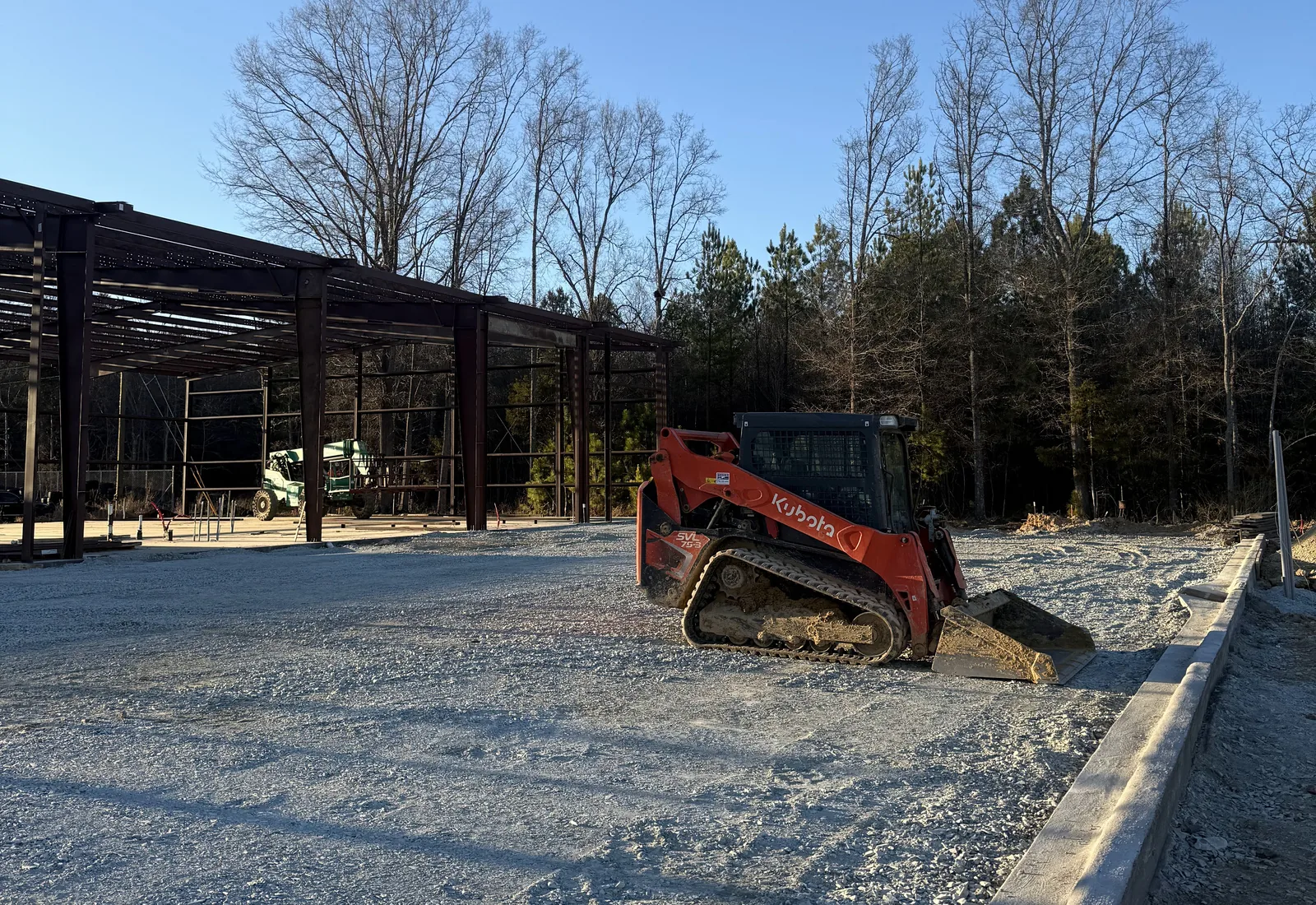
Site Prep
We prepare lots for new homes and commercial builds around Indian Trail and Charlotte. The work covers clearing, cut and fill, building pads, compaction and the first grade.
Learn More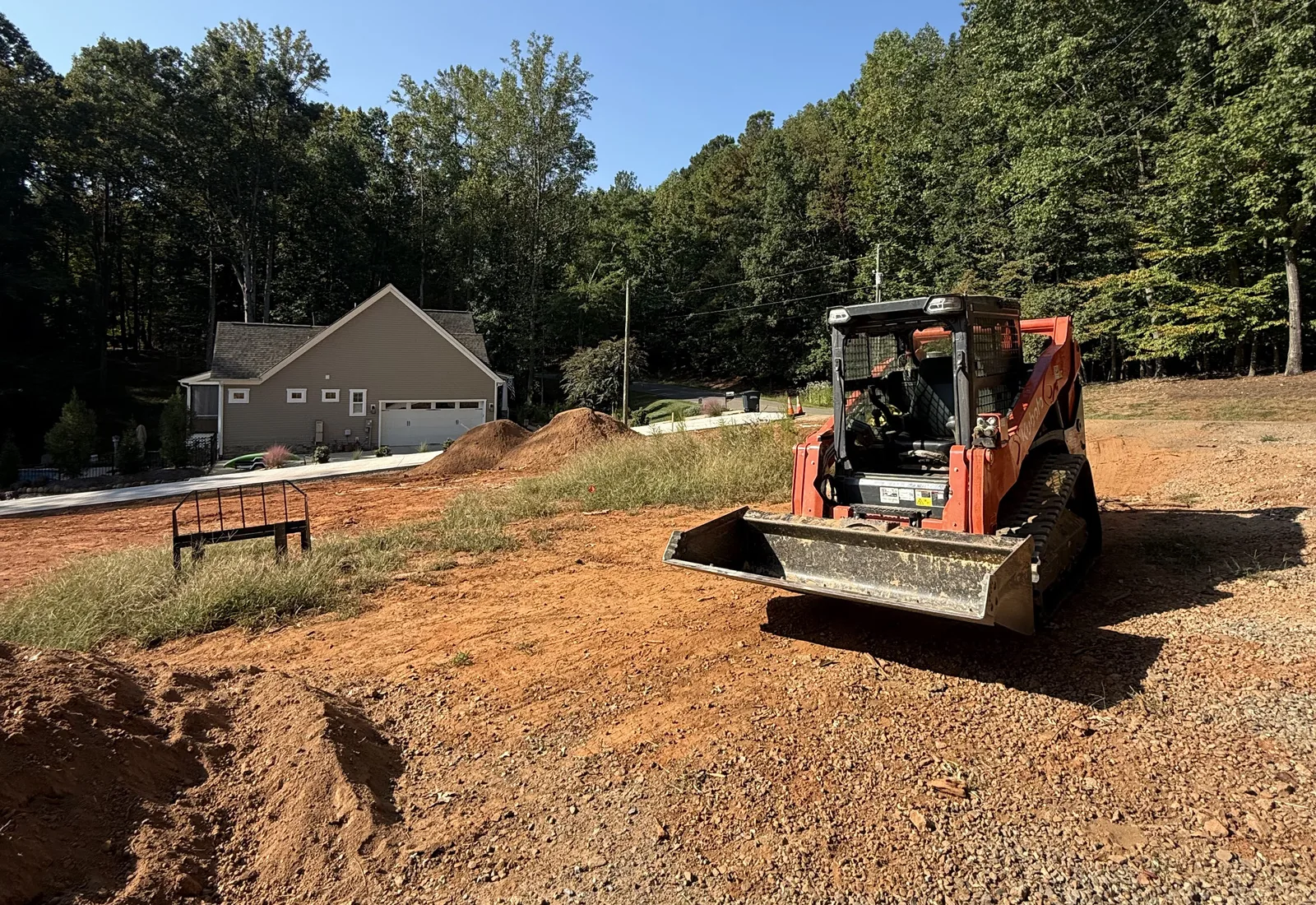
Grading is how the ground gets shaped so water runs off and a build sits level. Cornerstone Excavation Group is a grading contractor based in Indian Trail, on the east side of Charlotte. We regrade yards that hold water, cut and fill lots for new homes, and level commercial sites. Jobs run from one bad low spot in a backyard to a full lot.
A grade starts with where the water goes. We look at how the lot falls and where the water should leave. Then we move dirt until the ground drains away from the house and the drive. On a new build, grading runs together with site prep and pad work.
Tell us about the job. We will get right back to you.
Most yard grading calls start the same way. Water stands in the low spot after a storm, or it runs at the foundation instead of away from it. A mound or an old fill pile can cut a backyard in half and trap the runoff. Regrading a yard like that, so it drains away from the house, is work we get called for.
The North Carolina Residential Code sets the target next to a house. It calls for the grade to fall at least 6 inches in the first 10 feet from the foundation. Where a lot line or a slope makes that impossible, the code points to drains or swales instead. That is the shape we grade to on a yard fix.
A regrade often finishes with a swale, a shallow channel that carries runoff to the street or a ditch. Some yards need buried pipe as well, and that is a drain line or French drain. Grade first and pipe second is the order that usually works.
The ground around Charlotte is red clay. Cecil and Pacolet are the soil series you see most in this part of the Piedmont. Clay sheds water instead of soaking it up. Rain that would sink into sandy ground runs across clay and sits in the low spot.
Clay also moves. It swells when wet and shrinks as it dries, so a soft grade settles over a season. We compact as the grade goes in, not only at the end. On a pad, the builder or a geotechnical engineer sets the compaction, and we build to it.
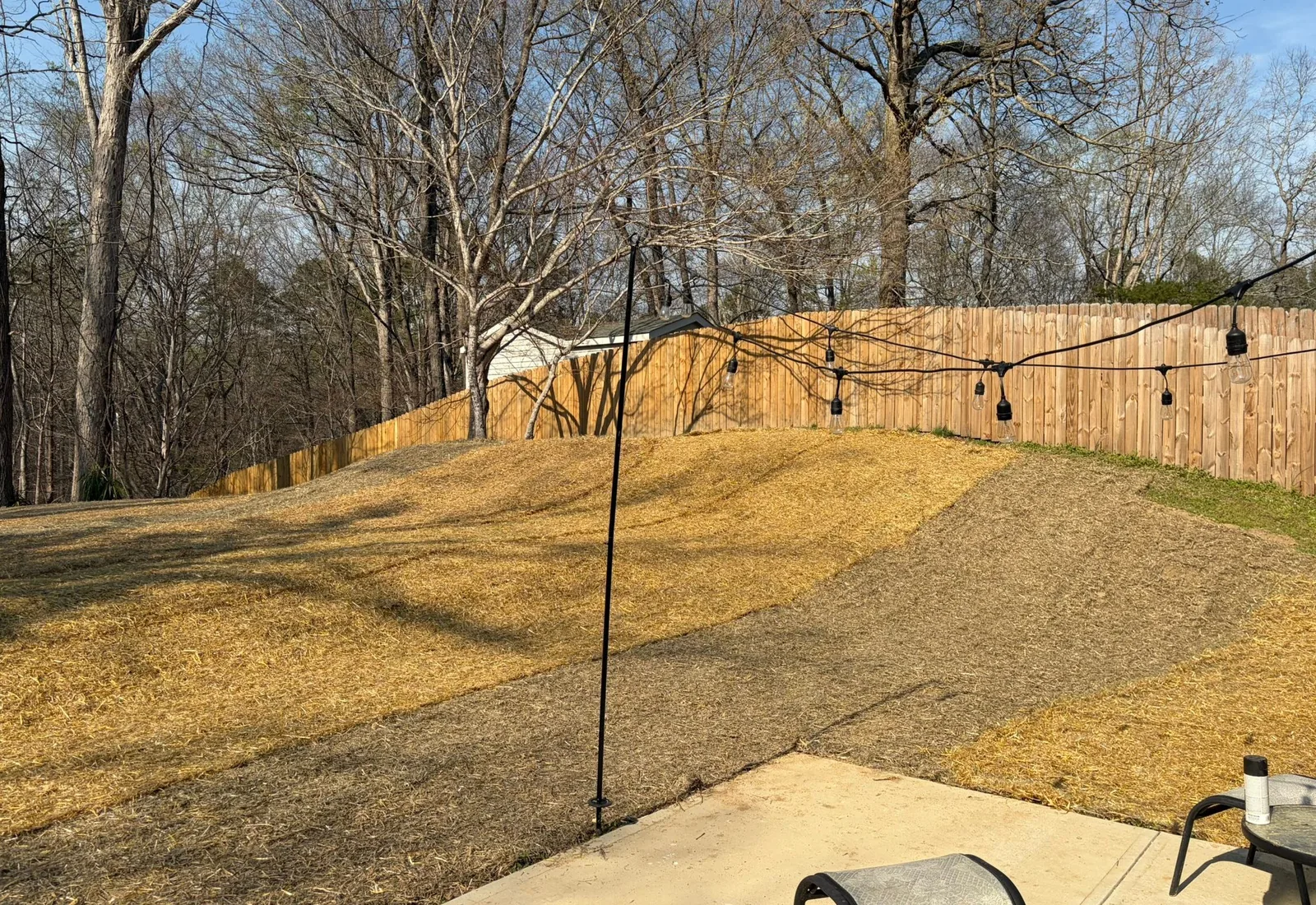
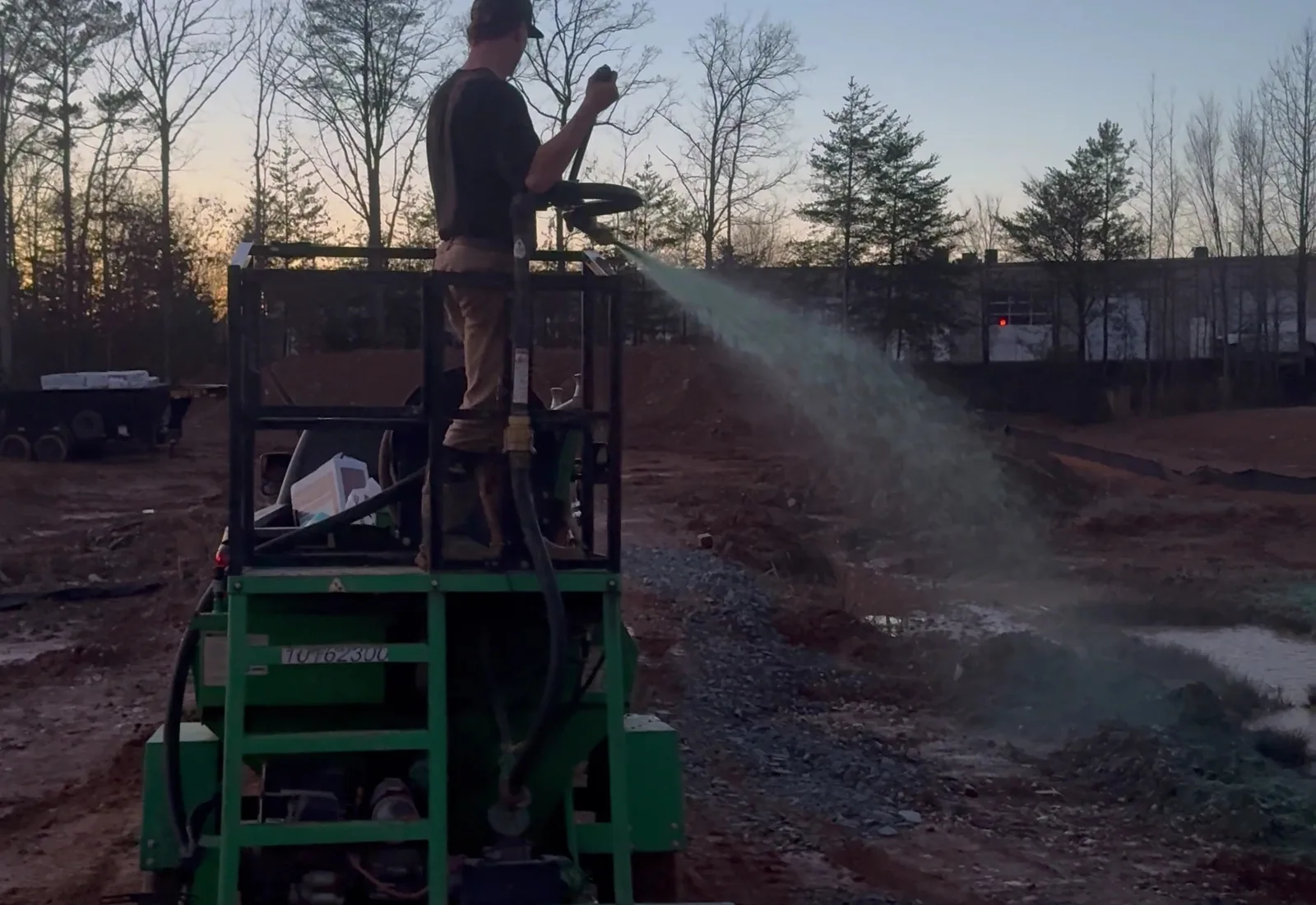
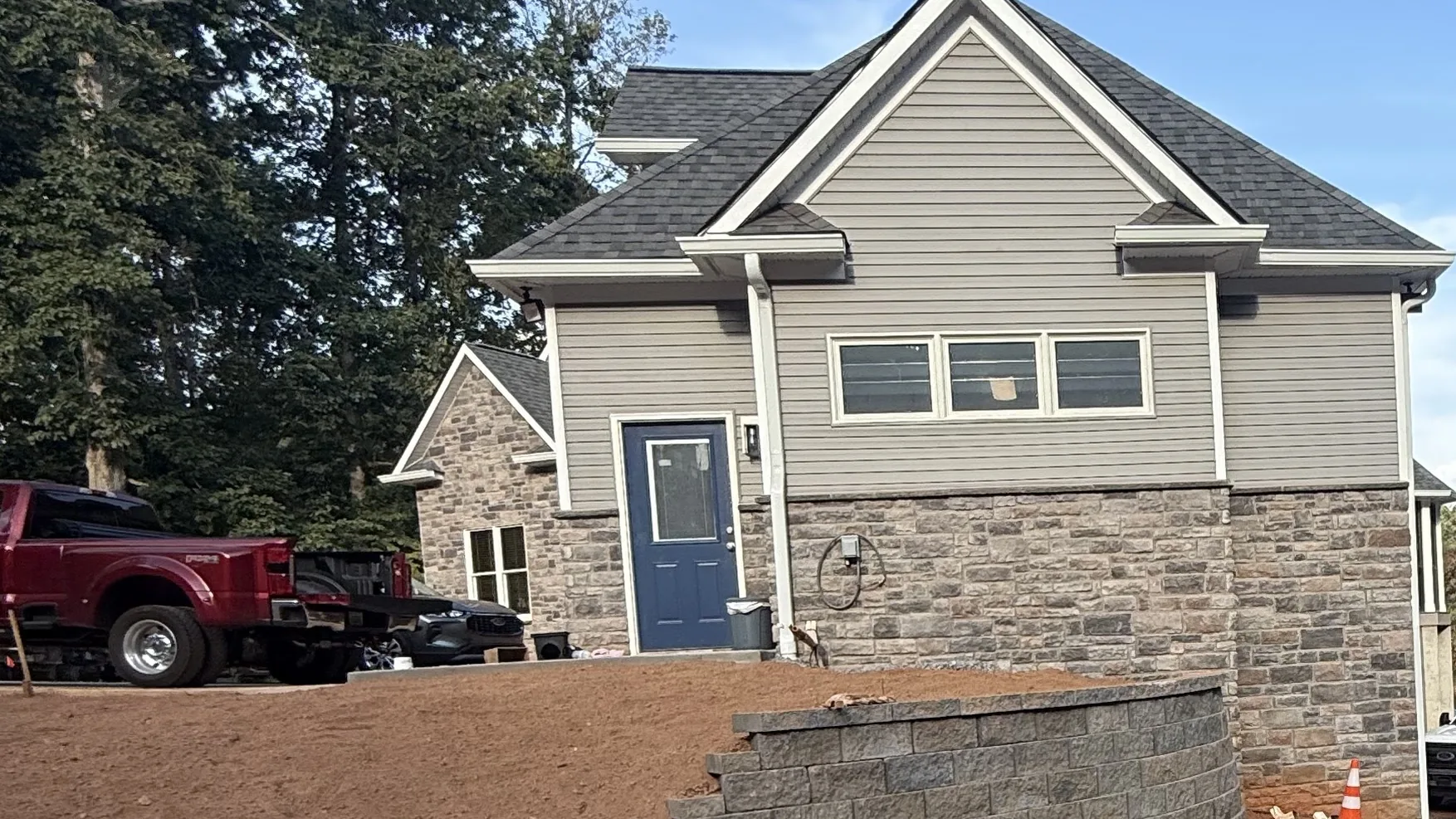
Some slopes are too steep to grade out and hold. When the drop is short and sharp, the answer is a retaining wall. That takes excavation, a compacted base and drainage behind the wall. Bare clay washes on a slope, so we can hydroseed the finished grade to help the soil hold.
New construction takes grading twice. Rough grading comes first. The pad goes in, the lot gets cut and filled, and water gets a path off the site. Final grading comes at the end, once the house, the drive and the utilities are in.
Cut and fill keeps the dirt count down. High ground gets cut and the material fills the low ground, so the lot balances on its own. When a site runs short or long, the difference is fill dirt brought in or spoils hauled off. Either way the debris leaves with us and the lot gets left clean.
A grading job starts with a call and a look at the site, and the estimate is free. We go over access, where the dirt goes, and what the finished grade has to do. Most residential grades run a day or two, and wet weather moves the schedule. Cornerstone is 5.0-rated on Google.
Free estimates across the Charlotte metro, Union County and the York County side of South Carolina.
(980) 315-5707From the first call to the last load hauled off, here is how it goes.
Call or text (980) 315-5707 and tell us what the job is. We ask what the access looks like and when you need it done.
We come out to see the ground, the access and where the water goes. The visit and the estimate are free.
We set how the equipment gets in, where the material goes and what order the work runs in. Utility locates go in through NC811 before we dig, and any permit stays in the owner or builder's name.
The machines come in and the job gets done in the order we planned. Weather moves earthwork, so we tell you when the schedule shifts.
Spoils, brush and demolition material leave on our dump trucks. We grade the ground back before the equipment comes off the site.
Common questions about grading across the Charlotte metro, Union County and the York County side of South Carolina. If yours is not here, call and ask.
We prepare lots for new homes and commercial builds around Indian Trail and Charlotte. The work covers clearing, cut and fill, building pads, compaction and the first grade.
Learn More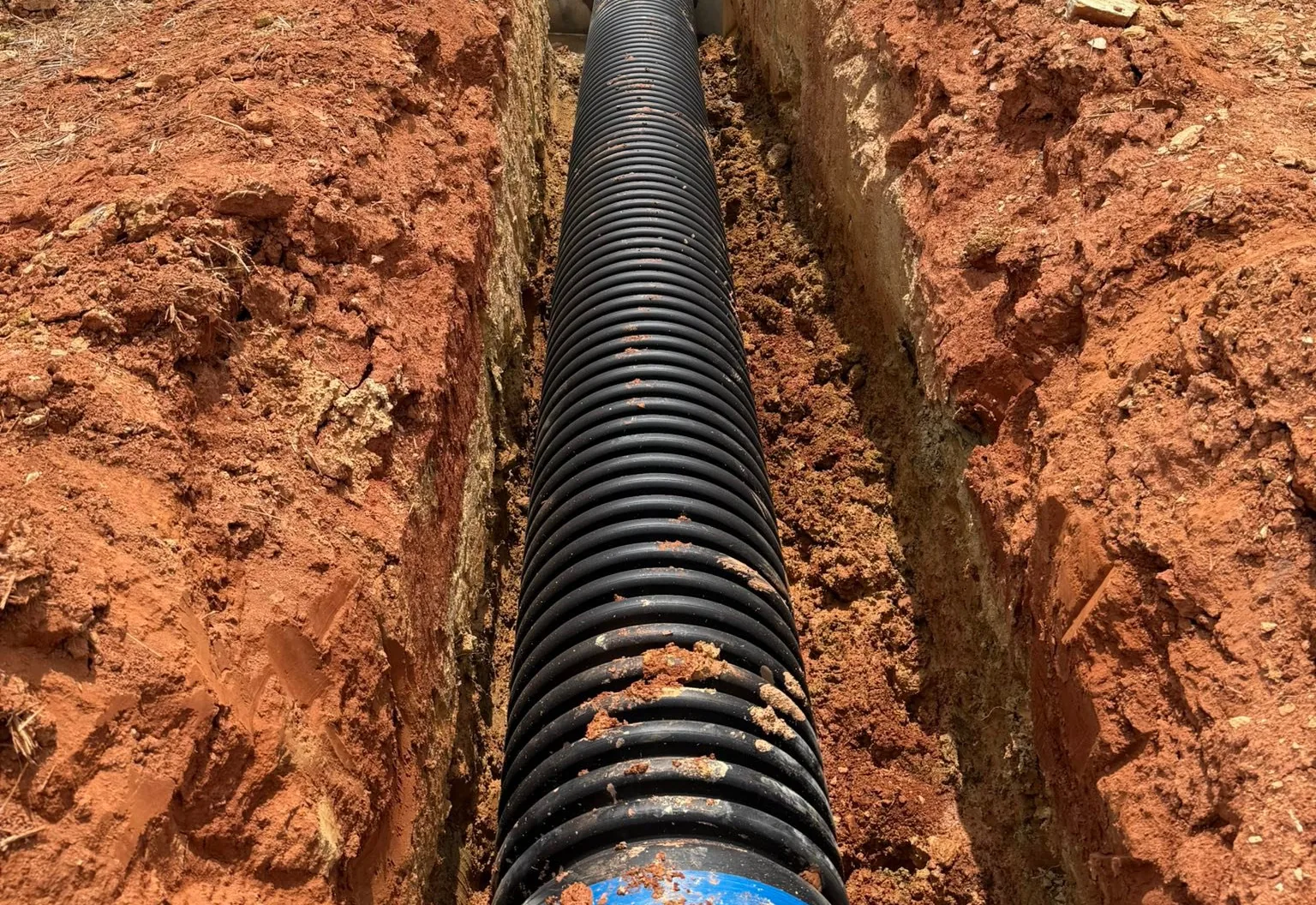
We fix yards and lots that hold water after it rains. Regrading, swales, French drains and buried pipe move it away from the house.
Learn More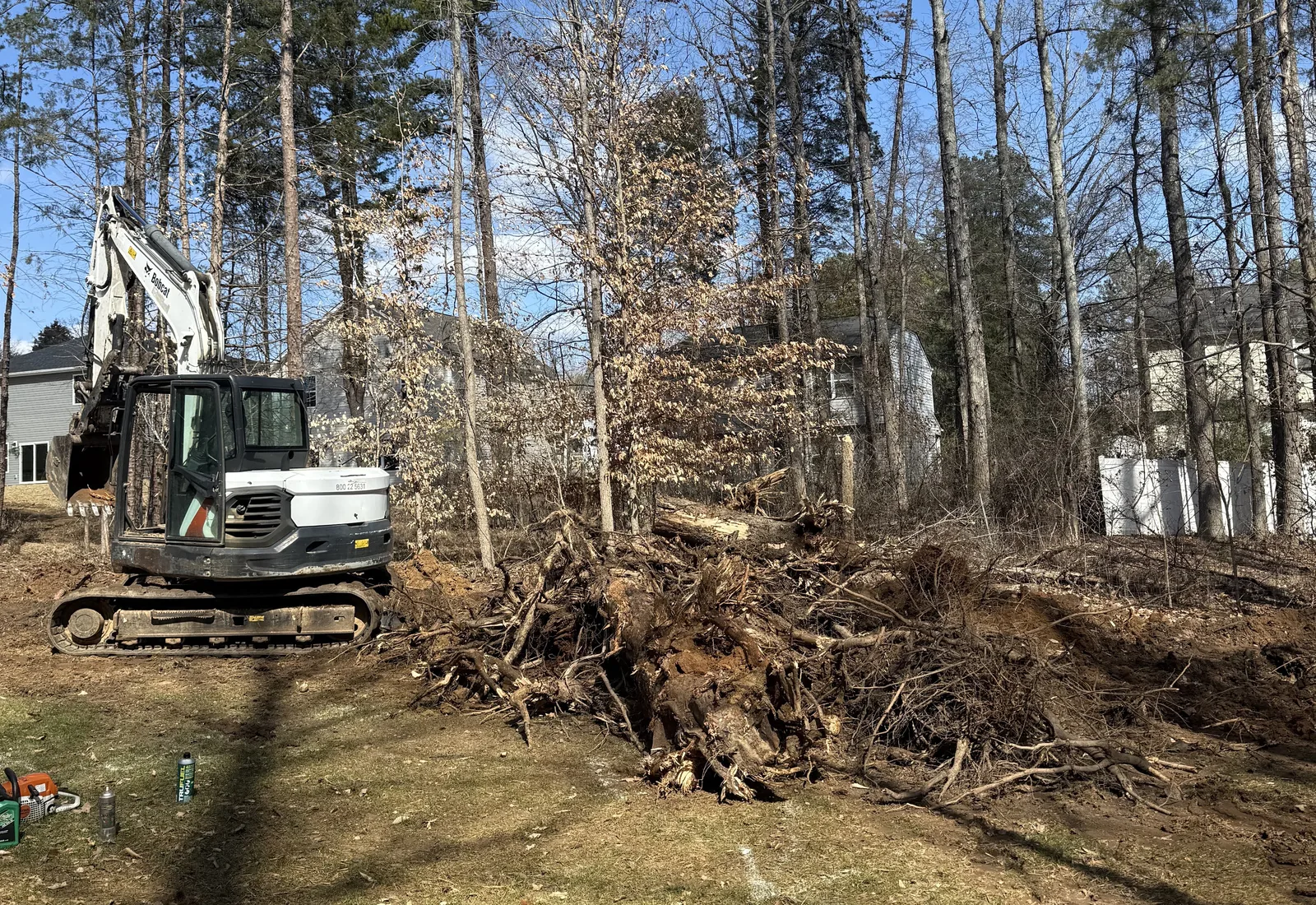
We clear lots and acreage across the Charlotte metro, with trees, brush, stumps and debris hauled off. The ground is left open and ready for the next phase of the job.
Learn MoreHomeowners, builders and property owners have rated the work five stars on Google. Those jobs cover grading, land clearing, demolition cleanup, drainage and a retaining wall.
We come to the property, look at the ground and price the work from what is there. The visit and the estimate are free.
Clearing, grading, digging, utility lines, walls, ponds, drainage, demolition and hauling all come from us. One company handles each stage, so the site stays on one schedule.
We work out of Indian Trail in Union County, on the Mecklenburg County line. Charlotte, Matthews, Monroe, Waxhaw, Mint Hill, Concord, Fort Mill and Rock Hill are all in range.
What does land grading cost in North Carolina? Published ranges by the square foot, the job and the acre, plus what moves the price near Charlotte.
Read more →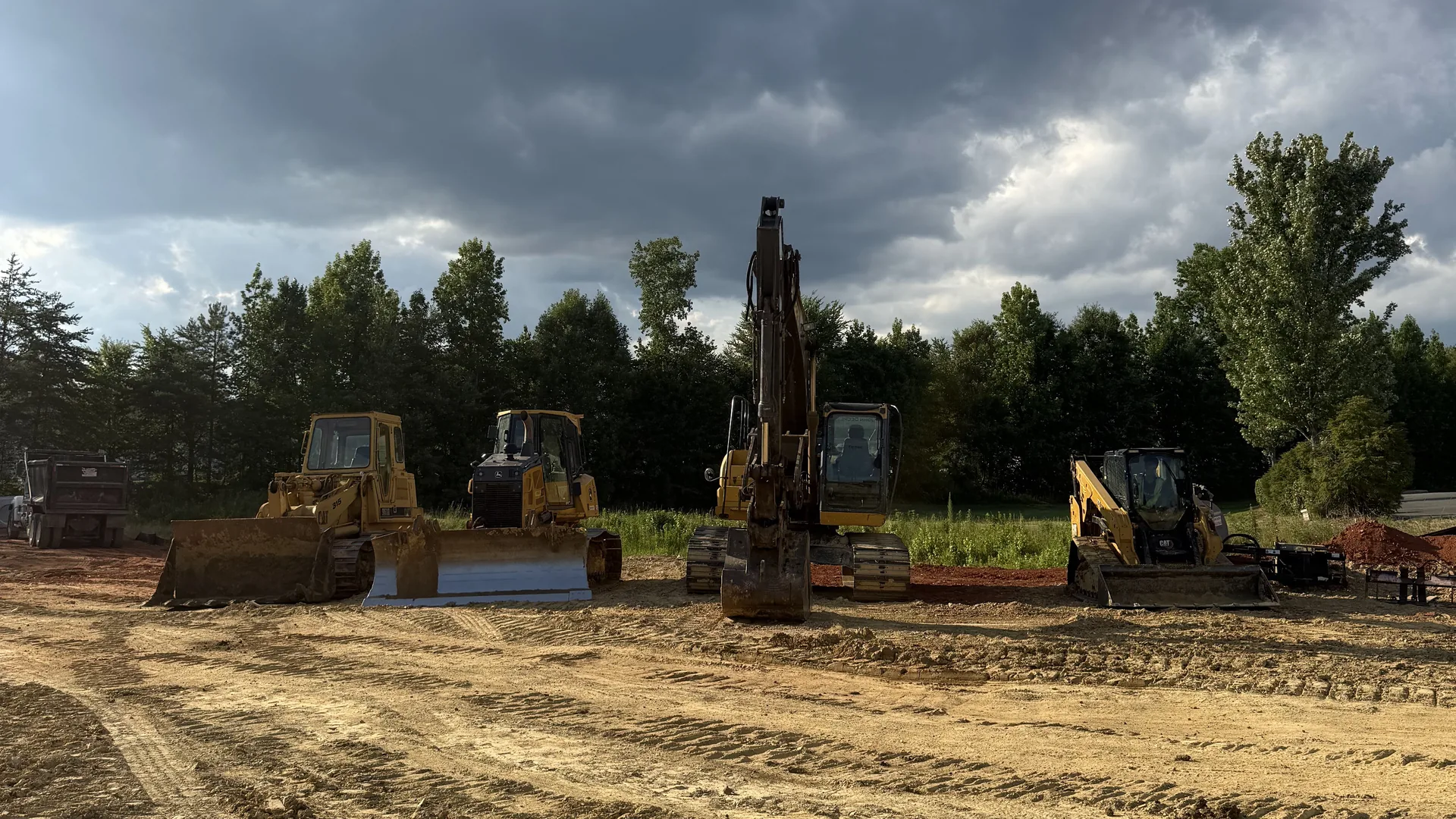
French drain cost in North Carolina: published market ranges per linear foot, what drives the price, and when regrading the yard is the better fix.
Read more →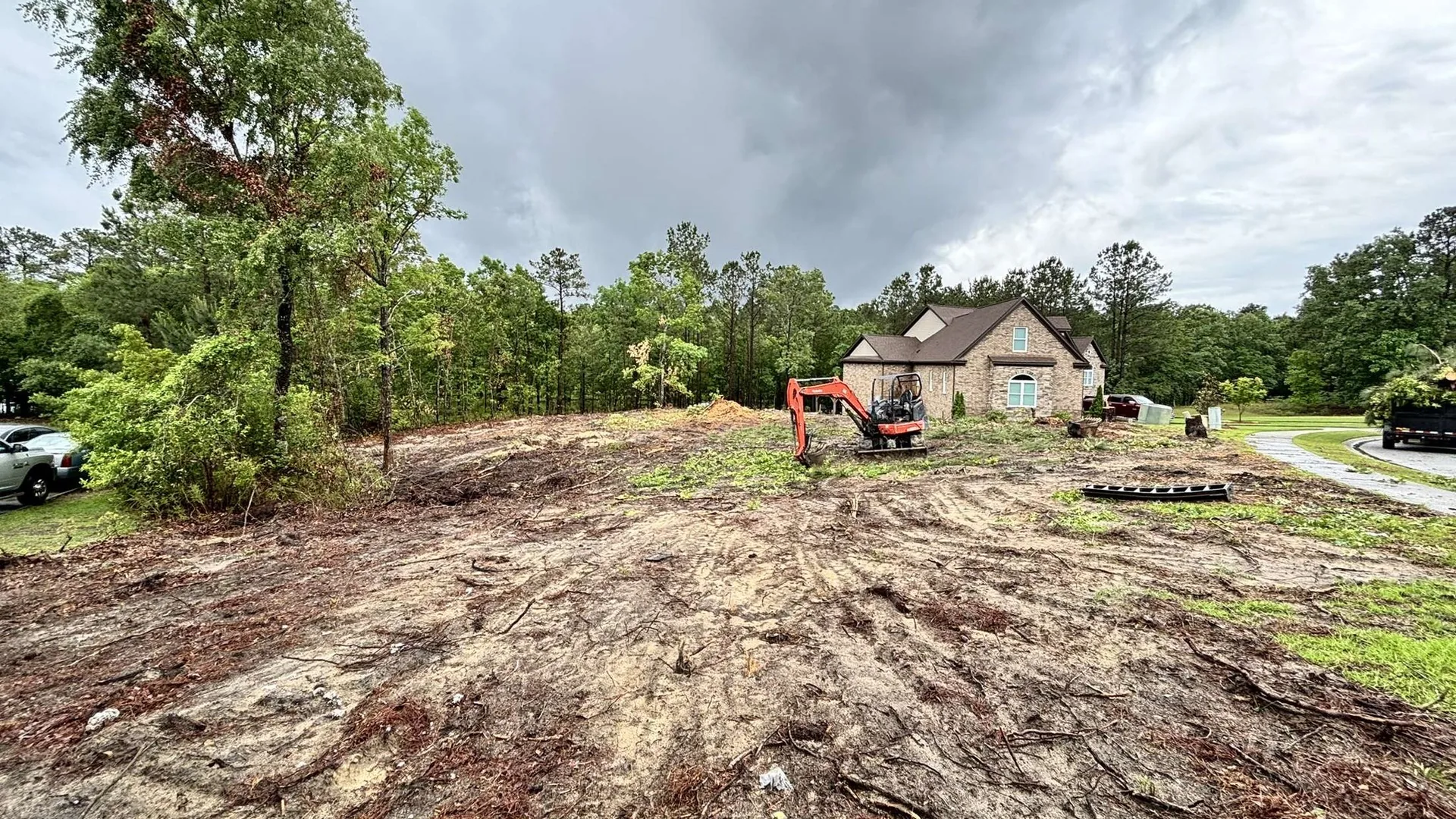
Pool excavation in North Carolina runs about $1,000 to $5,000 in published market ranges. See what drives a dig, plus rock, access and haul-off costs.
Read more →Tell us about the job on the form, or call (980) 315-5707. We will get back to you and set up a free look at the site.
Tell us about the job. We will get right back to you.